
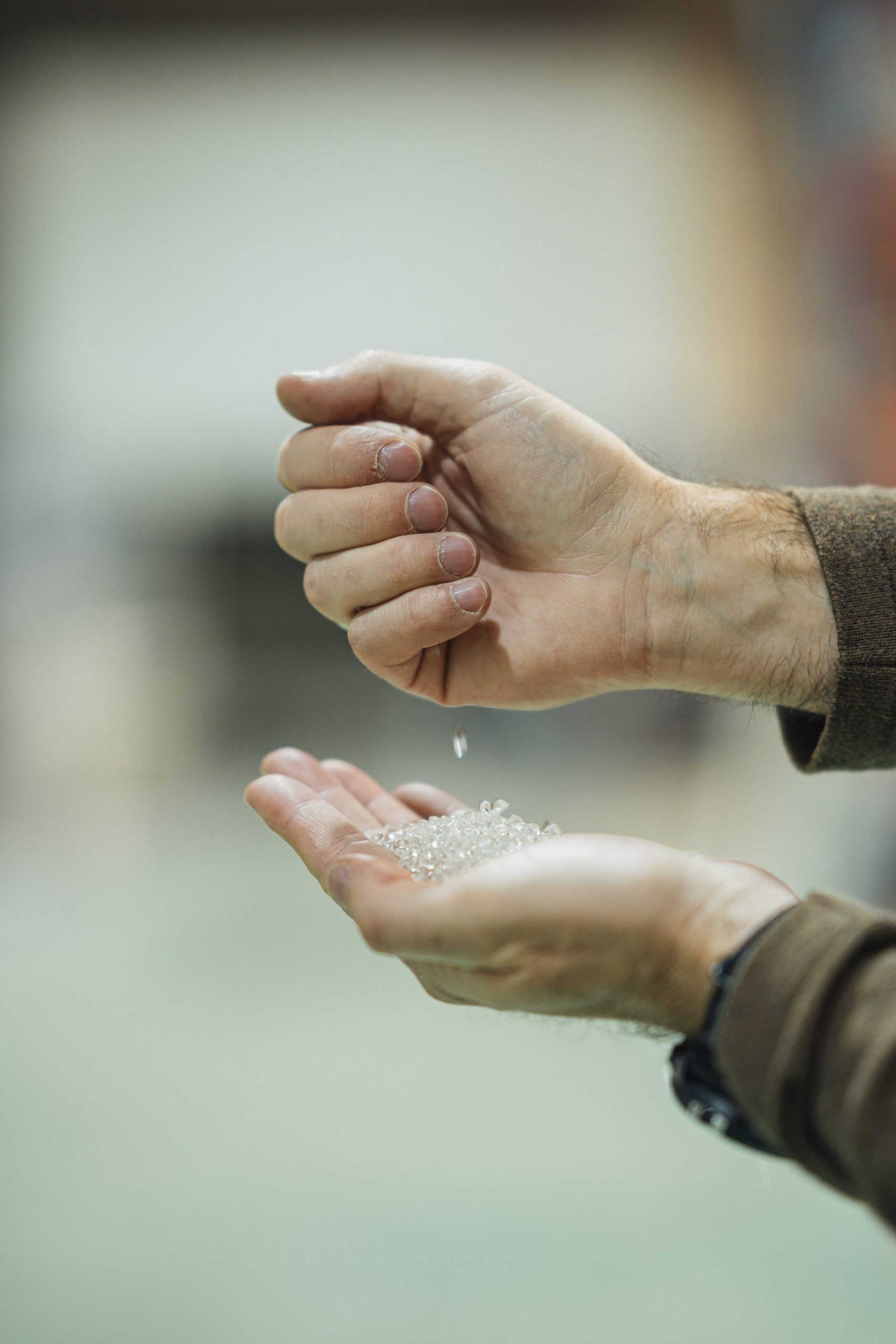
Plastic is an essential material in sectors such as automotive, home appliances, industrial packaging or furniture, thanks to its lightness, versatility and efficiency. However, its public image is often associated with waste and the linear “use-and-dispose” model. At Plasnor, we are aware of this global challenge and have been working for years to promote technical plastic solutions with the lowest possible environmental impact, integrating recyclable materials, optimising processes and collaborating on circular-economy projects.
1. Plastic is not the problem — its management model is
When handled responsibly, plastic can be a highly efficient and sustainable material:
-
Its low weight reduces transport emissions.
-
Its transformability allows complex industrial applications.
-
Materials such as PS, ABS or PET can be recycled multiple times.
-
Its durability reduces the need for replacements.
The challenge emerges when plastic is used within a linear approach. That is why at Plasnor we apply a strategy based on reducing, reusing, recycling and redesigning, integrating these principles into every development phase.
2. Recyclable materials for demanding technical applications
We work with recyclable and recoverable polymers such as PS, HIPS, ABS, ABS/PMMA, PMMA, PET and other technical materials.
These can be reintroduced into the production cycle as:
-
Post-consumer recycled material (PCR)
-
Post-industrial recycled material (PIR)
-
Blends and copolymers with recycled content
Each project is analysed with the customer to determine what percentage of recycled material can be integrated without compromising tolerances, strength, stability or aesthetics.
3. Towards a zero-waste model in our plants
Sustainability also depends on what happens internally. In our extrusion and thermoforming lines we implement:
-
Recovery and revalorisation of offcuts and surplus, reincorporating them whenever the polymer allows it.
-
Continuous process optimisation to reduce defects, thickness variation, energy consumption and waste.
-
Advanced waste classification, separating each polymer to ensure purity and facilitate subsequent recycling.
-
Collaboration with certified waste managers to safely treat non-recoverable waste.
The goal is clear: minimise waste and maximise internal circularity.
4. Circular economy: projects with customers and new solutions
We believe in a future where the entire life cycle of plastic is integrated into product design. That is why we work on:
-
Components made with recycled materials for appliances, furniture, automotive and logistics packaging.
-
Standard product ranges with recycled content without losing technical or aesthetic properties.
-
Reintroduction of post-consumer material, recovering PS and ABS from urban and industrial flows.
-
Design of monomaterial and recyclable products, with optimised thicknesses and finishes compatible with recycling.
-
Reduction of energy impact thanks to efficient machinery, better thermal management and optimised production cycles.
5. Plastics and sustainability: a matter of data
Comparing plastic with other materials requires a full life-cycle perspective. In many industrial applications:
-
It weighs less → less fuel and fewer CO₂ emissions.
-
Requires less energy than metals or glass to be produced.
-
Its long lifespan reduces replacements.
-
Its recyclability increases when the design is well conceived.
No material is perfect, but plastic, managed within a circular framework, is a strategic ally for industrial sustainability.

6. Plasnor’s commitment
Our approach combines proprietary technology, over 50 years of experience and continuous innovation:
-
-
-
-
-
-
Recyclable materials and options with recycled content.
-
Systematic reduction of waste in our plants.
-
Long-lasting technical solutions to minimise life-cycle impact.
-
Circular-economy projects with customers and suppliers.
-
Research into new materials and compositions through our R&D department.
-
-
-
-
-
We present below a success case where a customer replaced an external PC housing with Plasnor’s ABS/PMMA alternative, achieving high recyclability, eliminating the painting process and obtaining significant cost savings and sustainability improvements.
Conclusion: a more circular future is possible
Sustainability does not depend solely on the material, but on how it is designed, manufactured and managed throughout its entire life cycle.
At Plasnor, we embrace a circular approach where plastic becomes an efficient, durable and valuable resource.
📩 If you want to develop a more sustainable technical solution, our team can help you define the ideal combination of material, design and circularity for your project.